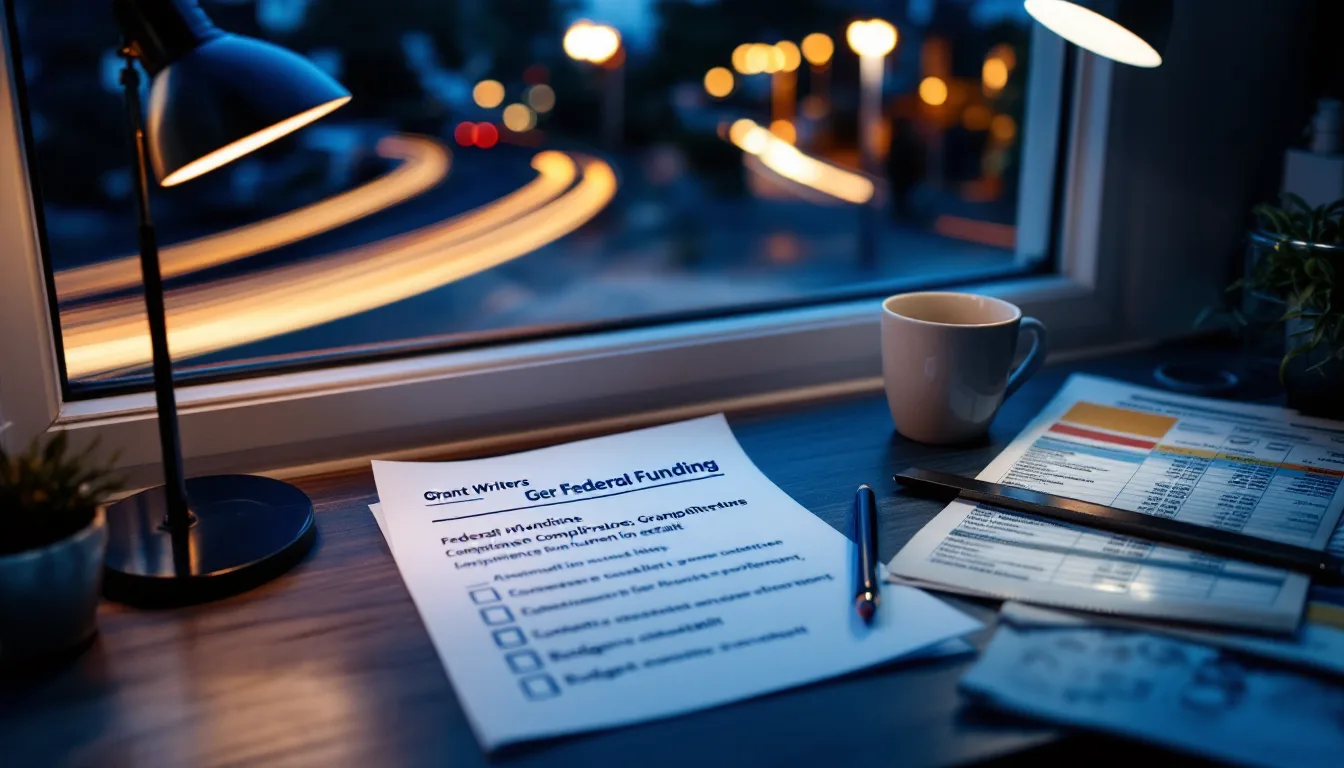
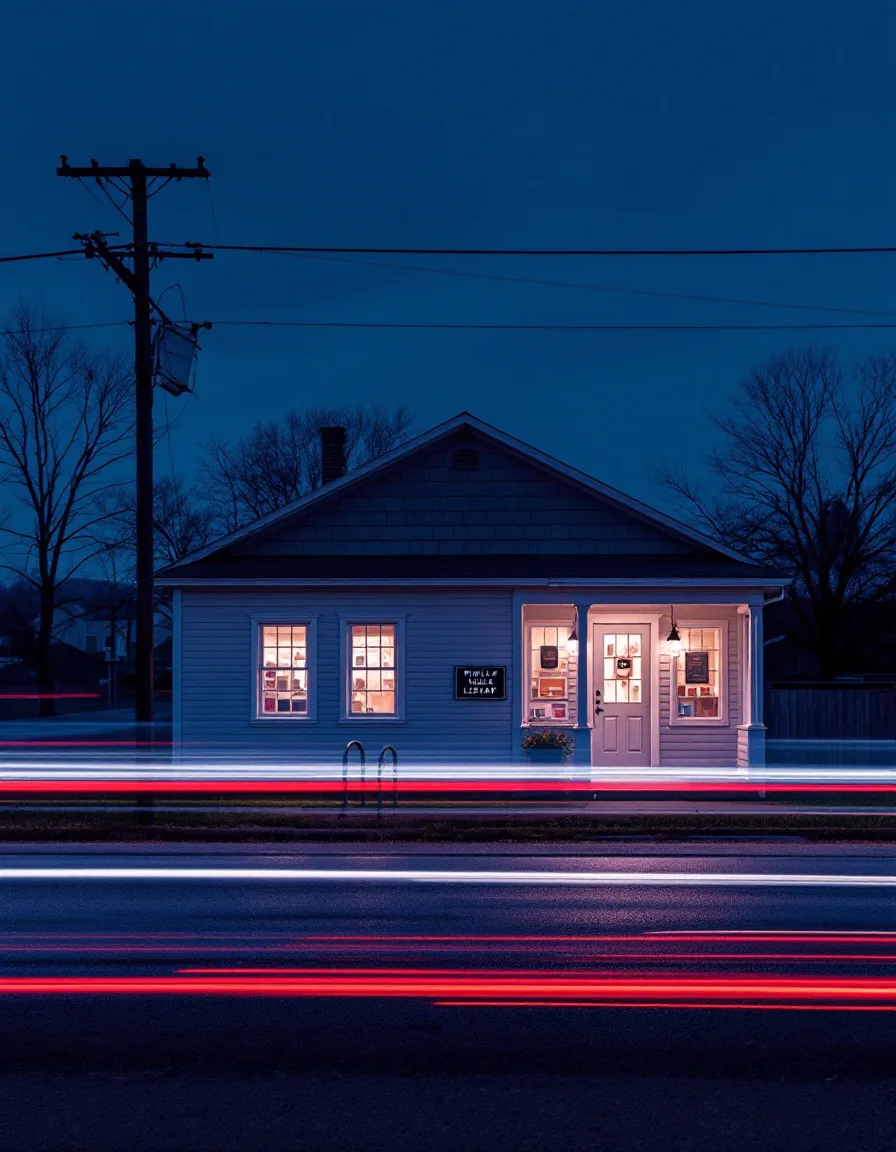
Plate — the desk, late afternoonNormandy Village · Nanuet, NY
01 / 04 Origin
a desk set up for the organizations funders say they want to reach.
Four part-timers, one boiler, no grants office
Most advice about grants is written for organizations that already employ a development director. Zebraquill was set up for the ones that don’t — the volunteer fire company whose treasurer is also its chief, the library kept open by a few part-timers, the food pantry whose board meets in a church basement on the second Tuesday of the month.
Those organizations are often precisely what a rural funding program was designed to reach. They also lose more applications than anyone, and seldom on merit. They lose them to a SAM.gov registration that quietly lapsed in March, to a budget narrative describing a different number than the SF-424A, to a portal that times out at 4:58 on a Friday afternoon.
So the desk does two kinds of work and declines to separate them. One is writing: finding the plain sentence that lets a reviewer see the pantry line on a Thursday afternoon in February. The other is clerical in the oldest, most honorable sense — reading the notice three times, building the checklist, reconciling every figure to the dollar. A proposal needs both, and it reads better when the same desk holds both ends.
We bill by the package rather than by the hour because a board deserves to approve one number, once. And we stay deliberately small, with a calendar built backward from every deadline we accept.
None of this is glamorous. It is, we think, the part of the work that decides whether a good program gets read at all.
02 / 04 Why a zebra
two kinds of writing run through every application, stripe against stripe.
The name is a working description. Every grant package alternates between the case — who you serve, and why it matters now — and the rules: eligibility, formats, figures, forms. Most applications come apart at the seam where one meets the other.
The light stripe · the case
the argument for the money.
The part a reviewer remembers when the scoring sheet is done.
The need, stated with local evidence rather than national averages
The program, described the way a reviewer can picture it
Outcomes you can measure with the staff you actually have
A voice that still sounds like your organization, edited
The dark stripe · the rules
the conditions of the room.
The part that decides whether the case is read in the first place.
Eligibility, UEI, and registrations confirmed before drafting
Page limits, fonts, and margins exactly as the notice specifies
Narrative, budget, and forms reconciled to the dollar
Every attachment named the way the portal expects it
Plenty of writers are fluent in one stripe. A fundable application needs both, interlocked, on the same page.
03 / 04 House rules
the house rules, written down so a board can hold us to them.
An engagement letter settles scope and fee. These settle conduct — six commitments that apply to every package, the $1,380 foundation letter as much as the $4,750 federal application.
Six commitments, read across: what the desk will do, and the line it won’t cross.
No.
The desk will
The desk won’t
01
Say no early.
If a funder isn’t a fit, you’ll hear it on the first call — even when that means there’s no package to sell.
Write to a program you can’t win.
Ineligible is ineligible, whatever the fee on offer.
02
Name the price first.
One flat fee, in writing, approved by your board before a sentence is drafted.
Take a cut of the award.
No contingency, no percentage, no hourly meter running quietly in the background.
03
Submit forty-eight hours early.
Portals stall and attachments bounce; the margin exists to absorb exactly that.
Treat deadline night as a plan.
If the calendar can’t hold a careful read, we say so before we start.
04
Reconcile to the dollar.
Narrative, budget justification, and forms checked against one another, line by line.
Recycle someone else’s story.
No narrative is lifted from another client with the names swapped out.
05
Ask why, after a decline.
Where a funder releases reviewer comments, we request them and fold them into the next round.
Promise an award.
Reviewers decide. Anyone guaranteeing the outcome is selling something other than writing.
06
Hand everything back.
Drafts, budgets, and the submission record live in a shared folder that stays yours.
Lend your application out.
Your work is never used as a template for another organization.
The full scope of each package — and its fixed price — is laid out on the services page, side by side.
Deadlines are not spread evenly. Grants cluster by season, and a desk that writes for small organizations learns to plan a quarter ahead of the calendar on the wall. Every funder keeps its own dates — always confirm against the notice itself — but the year tends to run like this.
JanFebMar
federal notices surface.
Many federal programs post funding notices for the year ahead, frequently with a short window to respond.
At the desk
Checking SAM.gov renewals and UEIs while no deadline is close — renewals can stall for weeks.
AprMayJun
state RFPs and spring rounds.
New York State agencies release RFPs, and many community foundations close their spring cycles.
At the desk
Writing at full stretch. This is the quarter where the forty-eight-hour rule earns its keep.
JulAugSep
the planning stretch.
Fewer deadlines, longer days. The quiet months are the ones that make the crowded ones work.
At the desk
Prospect scans, board-approved project budgets, letters of support gathered before anyone is in a hurry.
You are here · October
OctNovDec
reports, renewals, year-end decisions.
Interim and final reports fall due, family foundations settle year-end gifts, and next year’s federal calendar takes shape.
At the desk
Closing out reports at $420 each, and lining up spring applications while there is still time to do them properly.
A spring deadline is closer than it looks from October.A federal package wants six weeks; a call this month gives it all six, with room for a SAM.gov renewal if one turns out to be due.
bring the notice, the deadline, and the person who signs.
The first call is free and runs about forty minutes. Most end with a named package and its fixed price — or an honest reason to wait for a better-fitting funder.